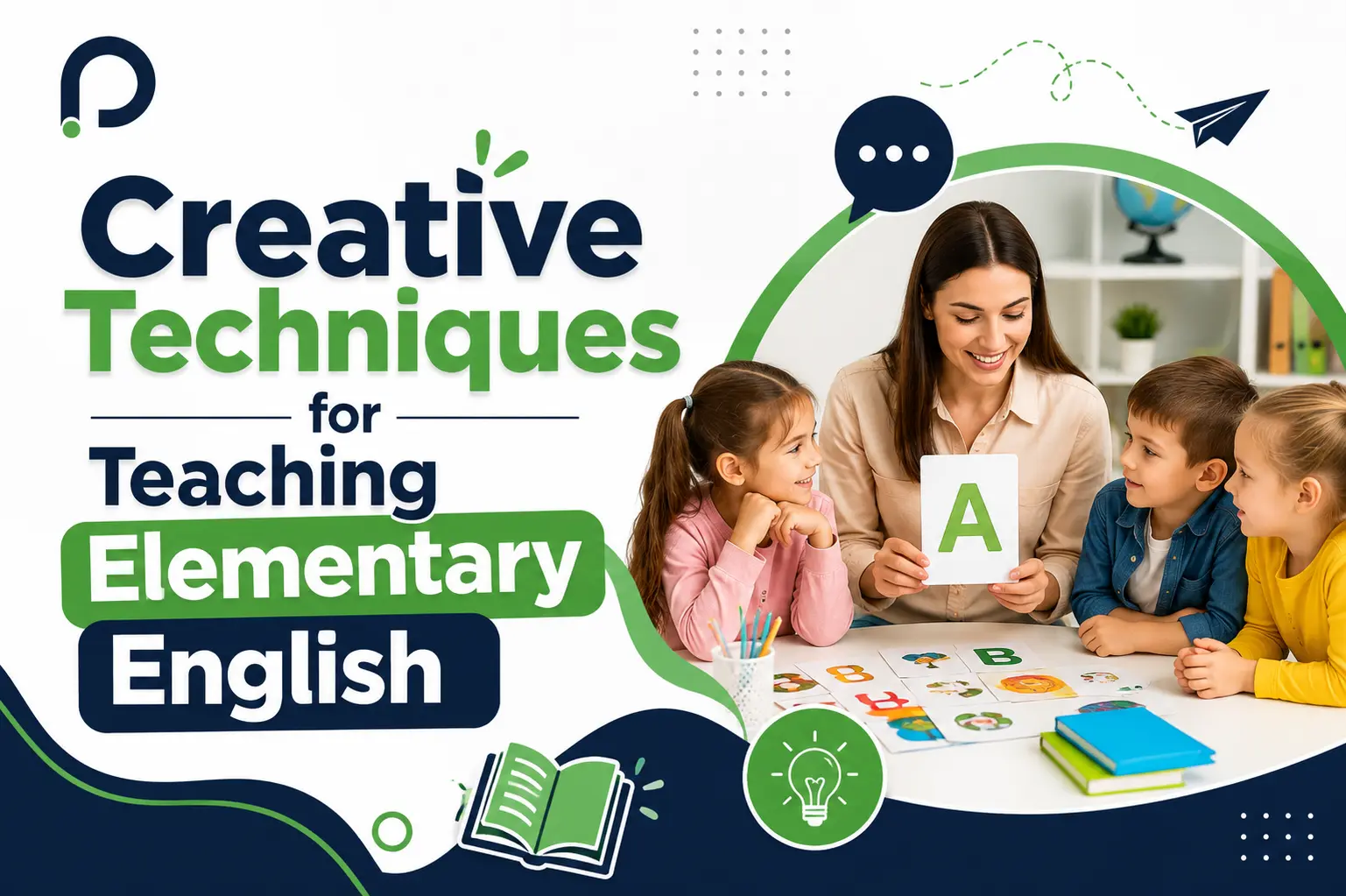
Why Creativity Is Essential for Teaching Elementary English
Teaching English to elementary students is different from working with older kids or adults. Younger learners usually have shorter attention spans, they react a lot more to sensory, interactive moments, and they often get stuck when grammar is explained in an abstract way through that typical lecture style.
At Profyd, we work with schools all around Lahore, Pakistan, recruiting elementary English teachers for onsite classrooms as well as online teaching roles, and honestly, one thing sort of pops up again and again when we talk with the most successful educators. Creativity in teaching styles, not just rigidly sticking to a textbook, tends to matter more. So if you are teaching or you are planning to teach elementary English, these approaches can genuinely shift how well young learners pick up and keep language skills over time.
Understanding How Young Children Actually Learn Language
Before jumping into the specific techniques, it’s good to get a feel for the psychology underneath it, you know. Little kids tend to pick up language much more smoothly through repetition, play, and multisensory involvement, not just by memorization or pure formal instruction by itself. It’s like, this is basically how they acquired their first language, via nonstop exposure, imitation, and that playful back-and-forth. Then when you apply the same mindset to English teaching, you usually see far better results than what you get from old-school grammar-focused approaches.
Storytelling as a Core Teaching Tool
Stories hook children right away, and honestly, they’re maybe one of the most useful tools for teaching English vocabulary, the way sentences are built, and basic comprehension. When you read age-appropriate stories out loud and you maybe use slightly different voices for each character, plus you pause here and there to ask simple questions, students stay interested. It feels calm and not super academic, but at the same time the language skills get reinforced as well, even if it seems like you are just listening.
Beyond just reading stories, getting students to retell stories in their own words, even if they make small mistakes, helps build confidence and boosts practical language use way more effectively than those isolated grammar drills, the separate ones.
Using Songs and Rhymes for Vocabulary Retention
Music kind of has a special knack for helping kids grab onto words and phrases because the rhythm and repetition do this thing where it just stays in their mind more easily. Like, simple songs and tiny rhymes tied to vocabulary themes such as colours and numbers, family members, or everyday routines can make the whole learning bit feel a lot more playful. And at the same time it keeps quietly training pronunciation and word recognition, which is useful too. A lot of experienced elementary English teachers will build entire vocabulary sections around one main song, and then they come back to it again and again, like a familiar anchor, during lessons, so everything feels stable and not overly confusing.
Incorporating Movement and Physical Activities
Young kids often have trouble sitting still for a while, and when you try to fight that urge, it just seems to backfire, sort of. So rather than forcing them to behave quietly the entire time, it can be smarter to weave physical motion right into the language lessons in a natural way. Like acting out vocabulary words, running a Simon Says style game with English instructions or prompts, and even using hand motions that stand in for different verbs. When you approach it like this, their energy gets steered toward something useful, and the language ideas stick way easier because there’s a physical link.
Visual Aids and Flashcards Remain Effective
Honestly, flashcards might feel a little old-fashioned, like they belong to another era, but they still work in a pretty real way for teaching basic English at the elementary level. Especially when they are mixed with interactive games instead of just doing plain rote memorization. Things like matching games, flashcard scavenger hunts, or quick response vocabulary games using flashcards can keep the whole learning process active, not sleepy and passive.
Role Playing Builds Practical Communication Skills
Setting up easy role-play situations, ordering food at a make believe place, saying who you are to a new friend, or asking for directions gives students that real-life reason to use English instead of just studying separate words or those grammar thing rules. And honestly, this approach really shines when you want confidence to show up for speaking English, not only for understanding it in a passive way.
Using Technology and Interactive Apps
For teachers working in online settings or classrooms with access to digital tools, educational apps, and interactive platforms can really boost engagement in a noticeable way. A lot of apps made for early English learning include mini games, quick feedback, and vibrant visuals, which match how young kids tend to interact with the learning material in the first place. This is especially true for teachers in online teaching positions, because digital tools then become the main channel for instruction.
Group Activities Encourage Peer Learning
Elementary students often learn pretty well from watching and doing with their peers, not only from direct instruction. Like, group activities and paired reading, small group conversations, or even collaborative story-building projects give these natural openings for language use while, at the same time, they build social skills besides language growth. Sometimes it feels less like teaching “at” them and more like the words just happen.
Consistent Positive Reinforcement Builds Confidence
Young English language learners often feel a little hesitant to speak, like they are worried about making mistakes or whatever, and it can be… awkward in the beginning. When you set up the classroom atmosphere, whether it’s on-site or online, so that mistakes are seen as a usual step in learning, not as something to feel ashamed about, students tend to join in more, and they are more willing to practice speaking. Simple positive reinforcement helps a lot here; for instance, celebrating the attempts, not only the correct answers, builds the confidence that supports real language growth.
Adapting Techniques for Online Teaching Environments
Teachers who handle online elementary English roles need to sort of adapt quite a few of these techniques for a virtual environment. This could mean using digital flashcards instead of the physical kind, adding interactive whiteboard activities, or relying on video call features like screen sharing and virtual backgrounds to keep the lessons from feeling dull even with that physical distance. A lot of the same principles—storytelling, songs, movement, and positive reinforcement—still matter; it’s just adjusted for a digital format.
Balancing Structure With Creativity
While creative techniques are valuable, elementary English teaching still needs some order or structure to help students move ahead through the required skills in a systematic way. The best teachers usually find a balance; they use creative engaging methods inside a structured curriculum framework, not just as if creativity and structure were somehow fighting each other.
How Profyd Supports Elementary English Teachers
At Profyd, we bring together skillful primary English instructors, with online and onsite teaching roles too, throughout Lahore, Pakistan. If you like the idea of working right inside a classroom setting or you want to deliver lessons through digital platforms, our announcements have flexible timetables, and yes, there are day and night shift options, depending on the particular post and the learner demographics.
Conclusion
Teaching elementary English effectively is about moving past that old textbook-only way and using more creative, interactive things that fit how little kids tend to learn, pretty naturally. Like, storytelling, songs, playful movement and a touch of positive reinforcement really help build actual language confidence in young learners. It feels less like “read and repeat” and more like the language sticks because they are involved, you know, in the moment.
So if you are a teacher with some experience, or even just thinking about becoming one in Lahore, Pakistan, Profyd can connect you with enthusiastic educators plus teaching chances. You can do it online and also on-site. Reach out to the Profyd team today so you can check out the latest positions, openings, and opportunities.
Frequently Asked Questions
What qualifications are needed to teach elementary English?
A teaching degree or certification that is relevant is generally expected too, along with solid communication skills and some experience working with young children.
Can these creative techniques work for online teaching as well?
Yeah, in most cases they can be adapted for online environments, using digital tools, video features, and some interactive platforms that are meant for young learners.
How do I make sure young students stay interested during online English lessons?
I would say keep it moving with short, varied activities, songs, visual supports, and interactive bits instead of long, static lessons, because that helps quite a bit in a virtual space.
Is classroom management different for English lessons specifically?
Not really a huge change, although language lessons often do better with more interactive strategies and movement-based activities compared with a few other subjects.