It’s nine at night and a Grade 10 boy has had the mole chapter open since Monday. He has underlined the definition (twice, in two colours) and stuck 6.02 × 10²³ on a yellow note to his lamp, but give him a question about how many grams of magnesium react with 0.2 moles of oxygen and he goes quiet and starts rubbing his eyes. At Profyd, our online science tutors see this exact moment most weeks, usually with a student who has worked hard and still can’t get the numbers to move.
Then on Sunday his online tutor draws twelve dots on the shared screen. “A mole is a dozen. A stupidly big dozen.” Ten minutes later he’s doing the calculations himself and looking slightly annoyed that nobody put it like that before.
Most of online science tutoring looks like that Sunday call, to be honest about it. There’s no clever app doing the heavy lifting. Somebody sits with one kid long enough to find the explanation that works for him, and then keeps going. Families in Lahore book these sessions now, so do Pakistani families in the UK, Canada and Australia, and the main thing they say they’ve lost is the drive to the academy.
So why do hard science topics feel easier on a laptop?
That question sits at the heart of this article. It follows a few stuck students, the boy with the mole chapter, a girl lost in electrolysis, a cricket fan meeting momentum through a yorker, to show how online science tutoring makes complex topics easier, and then finishes with some plain advice on picking a tutor (plus a note for graduates who’d like to become one).
Why Some Science Topics Feel Impossible
Mostly because you can’t look at the stuff. Electrons, bonds, ions, none of them turn up in a photo, and still a fifteen-year-old has to imagine them, do sums with them and write a six-mark answer about them in a language he doesn’t speak at home. Get the first mental picture slightly wrong and the next three chapters get built on a crooked base without anyone noticing.
Then there’s the stacking thing. Didn’t really get particles in Grade 7? Rates of reaction in Grade 9 will feel like a foreign language, and A Level equilibrium won’t stand a chance. A teacher with forty-two kids and a syllabus to finish by March can’t rewind two years for one boy in the third row.
Language adds its own trouble. Plenty of students think in Urdu and write their answers in English, and in physics the words “work”, “power” and “current” don’t mean what they mean at the dinner table.
The pace finally belongs to the student
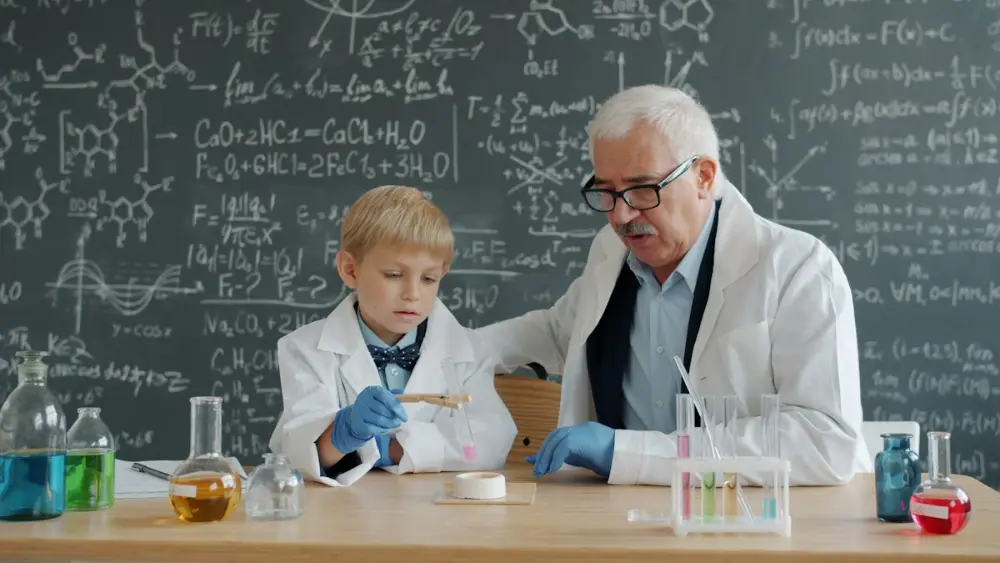
In a classroom the timetable decides when ionic bonding is done, ready or not. With one student on a call it works the other way round, so if bonding makes sense in ten minutes they move on, and if covalent bonding takes three Sundays then it takes three Sundays and nobody is sighing at the back.
Tutors spot trouble faster, too. A long pause on a video call is weirdly obvious, and the decent ones pounce on it: “Okay, tell me what you think is going on.” Usually the answer reveals some tiny mix-up that would have quietly cost marks until the board exam.
Small steps instead of one big lecture
Electrolysis is a good example of a topic that gets crammed. The textbook puts ions, electrodes, half equations and products on one page and expects the lot to go in at once. A tutor can give it three weeks instead: what an ion actually is in the first, why they drift towards the electrodes once the switch is on in the second, and the products only at the end when there’s a picture to hang them on.
It feels slow. It ends up faster, because the kid isn’t memorising a diagram he doesn’t believe. There are more tricks like this in Profyd’s piece on keeping science students engaged.
Seeing the invisible
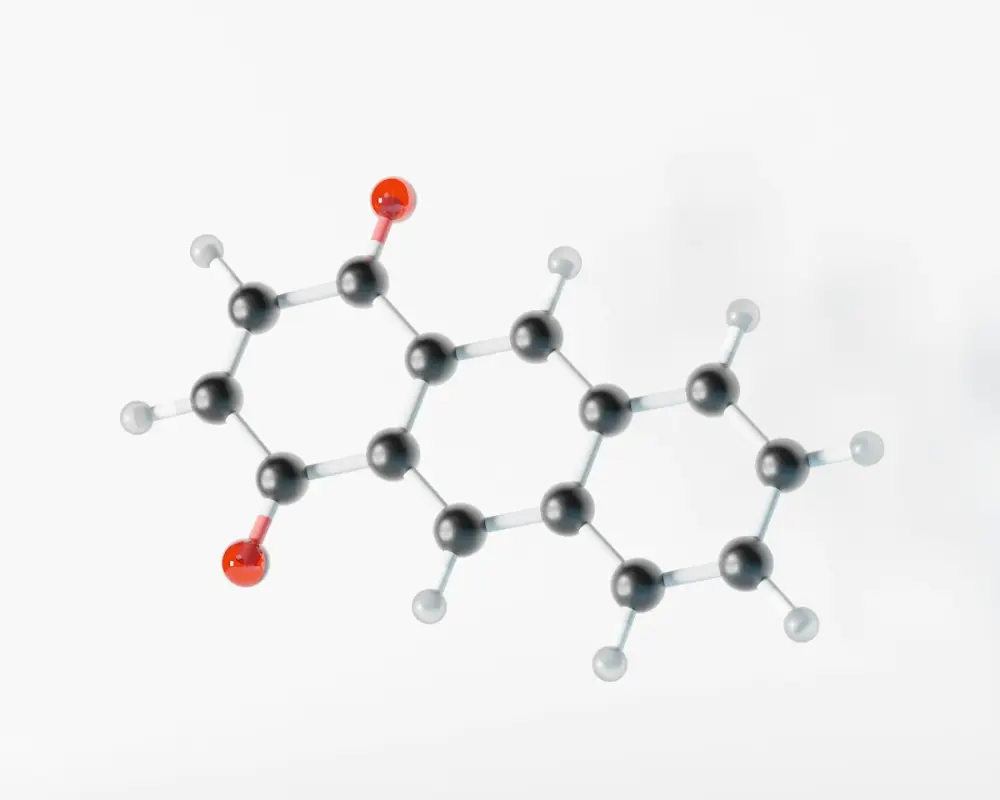
Here a laptop has a real edge over the blackboard. Before the student has even found a pen, the tutor can open PhET simulations, a 3D molecule that spins under the cursor, or a short clip of a cell splitting. Push the resistance slider up and the ammeter reading drops, right there. Turn methane around on screen a few times and the word tetrahedral stops being just a word.
With abstract chapters, that visual piece is the bit most kids were missing all along. Once the picture’s right, formulas stop feeling random, which is why online science tutoring tends to do best with exactly the topics kids dread.
Science from the kitchen and the cricket ground
Students forget a definition by the following week, but they’ll remember a story for years. Specific heat capacity is the rooftop in June, the concrete burning your feet while the water in the tank is somehow still cool. Osmosis is that plate of salted cucumber sitting on the counter till after lunch, going limp in its own puddle. Pressure is the cooker in the kitchen, which whistles about it twice a day anyway.
The examples change depending on who’s on the other side of the screen. For a boy who watches every match, momentum comes as a 145 kph yorker hitting the stumps. A girl who bakes at weekends gets reaction rates through her cake that sank in the middle (too much baking powder, as it turned out).
The questions nobody asks in class
Any teacher will tell you the quiet ones are often the most lost. No sixteen-year-old wants to ask what a joule is, out loud, with thirty classmates listening. Online, one-to-one, there’s no audience. Those questions finally come out, sometimes all in a rush.
And once a kid stops worrying about sounding stupid, things move quickly. The confidence tends to follow them back into school as well.

Practice with a point
Getting the idea is half of it. The other half is cracking exam questions with a clock ticking. In online science tutoring the practice is picked deliberately: struggling with rearranging formulas means ten questions that all need rearranging, not some random worksheet photocopied out of a guidebook.
Then there’s the exam craft nobody teaches properly. How many points a three-mark answer actually needs. Why “describe” and “explain” are different instructions. Why the units matter even when the number’s right. Boring stuff, admittedly. Also exactly how a B turns into an A.
Each science has its own sticking points
Physics kids tend to trip over forces, circuits, waves and graphs, so lessons blend simulations with a lot of worked calculations. Anyone tutoring physics should look at Profyd’s guide to running engaging online physics lessons.
Chemistry is mostly the mole, bonding and organic reactions. Ball-and-stick models and colour-coded equations do a lot of heavy lifting there. Solid chemistry tutors are hard to come by, which is partly why Profyd wrote a separate piece on career opportunities for chemistry teachers.
Biology is hard for a different reason. Hardly any single idea in it is difficult, there’s just so much of it, and the cure is fairly boring: flowcharts, diagrams labelled over and over, revision spread across weeks, and a tutor asking the same question about the nephron until the answer comes out without a pause.
What a decent online science tutoring session looks like
Parents often ask how they’re supposed to know whether the money is well spent. Look at the shape of a lesson. A quick recap of last week. One new idea, not four. Something visual. A few questions the child tries while the tutor watches. Then a small task for the next few days.
The student should be doing at least half the talking. If the tutor talks non-stop for an hour, that’s basically a pricey YouTube video with a webcam attached.
Where parents come in
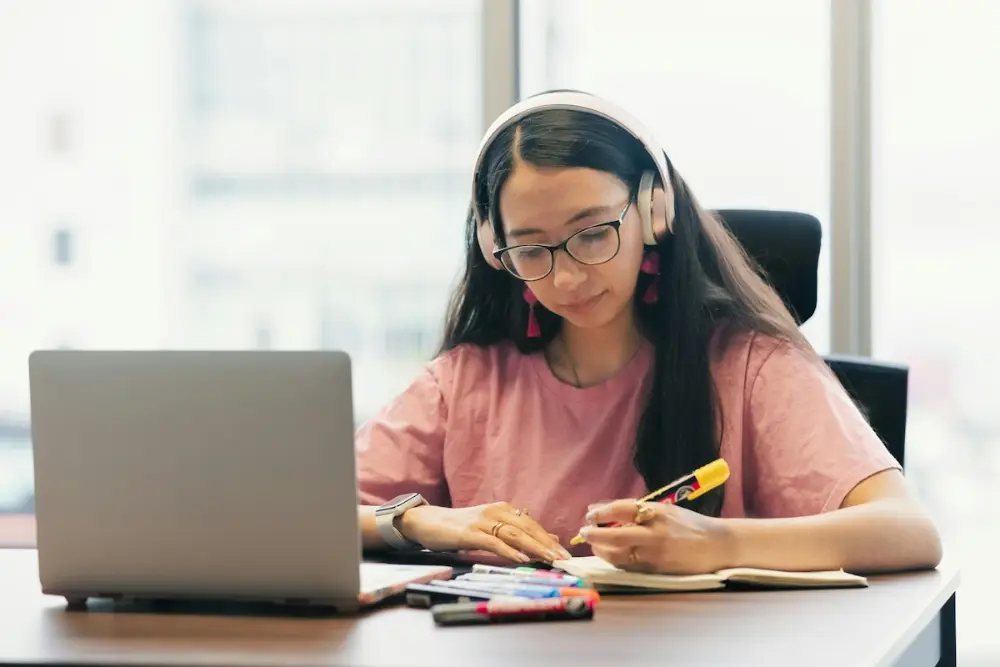
Zero science knowledge required. The useful contributions are dull ones. A room where the TV doesn’t bleed through. A headset not held together with tape. A UPS, because the grid has a habit of failing mid-titration. Asking the tutor for a quick WhatsApp update every few weeks is perfectly normal, and a single bad test in October shouldn’t cause panic.
Board matters, too. O Level physics and local board physics overlap on paper, yet sitting the two exams feels like playing cricket versus squash. Find someone who knows the right one.
Finding the right tutor
Book a trial and just sit in the next room listening. Is the tutor asking questions or only lecturing? Anything visual on the screen? Afterwards, can your child explain the topic back to you over chai? A clear answer means the session worked. A blank look over the cup means it probably didn’t.
Paying slightly more for a specialist tends to pay off. Science is right up there among the most requested tutoring subjects in Pakistan, so choice isn’t the issue, and a tutor who only does biology tends to know every trap in the paper.
A note for science graduates
Demand for online science tutoring keeps creeping up, a lot of it from families in the UK, USA, Canada and Australia, and companies in Lahore are forever hunting for people who can make hard stuff simple. Biology grads might start with Profyd’s article on online biology teaching careers.
Nobody needs ten years in a classroom to start. Solid subject knowledge and a demo lesson that doesn’t wander will open most doors. Current openings are listed on the Profyd teaching jobs page.
Conclusion
Remember the boy with the sticky note? A couple of months of patient, screen-shared lessons later, the mole chapter has stopped being the villain. “I’m useless at chemistry” has turned into “wait, that’s it?” The marks usually catch up with that change, though the change itself is the real win.
None of what makes online science tutoring work is secret. A slower pace, a picture of what’s really going on, permission to ask the “dumb” question. Hard to deliver to forty-two teenagers at 11:15 on a Tuesday, though, which is the whole point.
FAQs
Is online science tutoring as good as a tutor who comes home?
For most kids, yes. Nobody’s spinning a 3D molecule on the dining table during a home visit, and nobody’s stuck in traffic waiting either.
Which topics get better fastest?
The invisible ones. Moles, bonding, electricity, forces, cells.
Two sessions a week or three?
Two is the usual rhythm for Grade 9 and 10. Plenty of families go to three once mocks are over and the boards are eight weeks away.
Can practical work be taught over Zoom?
A fair amount of it. Virtual labs handle the dangerous stuff, short clips handle the rest, and boiled red cabbage makes a decent pH indicator for anyone willing to sacrifice one from the sabzi basket.
When do results start showing?
Parents often notice it at dinner first, when a child who used to groan about chemistry starts lecturing everyone about ions. Test marks generally catch up a few weeks later.