Building a Career as a Full Stack Web Developer
There’s a reason “full stack developer” keeps showing up, like a lot, in job ads across Lahore, Pakistan, and beyond. Companies really seem to like hiring people who can juggle both the front end and the back end in a single project without needing two separate specialists. At Profyd we’re seeing that demand, day after day, because businesses are always searching for developers who can slide between different parts of a product without losing momentum. Still, the part we hear most from job seekers isn’t really why the role matters; it’s more like how to actually become one and how to get there without spending years doing the same loop over and over.
Now the honest truth is that “quickly” depends on what you mean by it. You can build a solid, job-ready skill set in six months to a year if you approach it the right way and if you focus on the right targets. What makes the biggest difference is steering clear of the usual traps that quietly slow people down, even when they’re trying hard.
Understand What Full Stack Actually Means
Before jumping into tutorials, it kind of helps to get a grip on what the term actually covers, you know. A full stack developer works across three layers: the front end which is what users see and tap into; the back end, which handles data, logic, and server operations… and also the database layer, where information is stored and neatly organized. Being “full stack” doesn’t automatically mean you’re required to master every single technology out there. It’s more about feeling at ease across each layer, enough to put together a complete, working application in the end.
Start With the Front End Basics
Most successful developers start with HTML, CSS, and JavaScript because these become the foundation of pretty much everything you can actually see on a website. HTML puts the structure in place; CSS does the styling stuff, and JavaScript adds the interactivity, the responsive behaviour. If you jump ahead to frameworks before you really get these basics, well, confusion tends to show up later, like, out of nowhere. So it’s better to put in some real time here even if it feels slow in the beginning
After the fundamentals feel comfy, then learning a front end framework, like React, is usually way easier. React right now is one of those most requested skills in job listings, not only because it helps developers make complex, interactive user interfaces more efficiently than plain JavaScript, but also because teams keep asking for it
Move Into Back End Development
Once the front end feels kinda solid, then comes that next phase of figuring out how servers and databases actually work. Node.js is a decent first choice since it’s built around JavaScript, so you’re not stuck learning a totally new language just to write back end logic. On top of that, getting comfortable with databases is key too—whether you go the SQL route, like MySQL, or the more flexible NoSQL approach such as MongoDB, you need to know how to store, query, and pull data back out in a clean way.
This is also the point where a lot of people start feeling really overwhelmed, not because it’s impossible, but because backend ideas like APIs, authentication, and general server behaviour are less visual. They can feel more abstract, harder to build an intuition for, especially at the beginning. One trick that helps is building small projects, rather than only watching tutorials. It sounds simple, and it is, but it makes a huge difference.
Build Real Projects, Not Just Practice Exercises
This is probably the one biggest factor separating fast learners from slow ones. Watching tutorials feels kind of productive, but it rarely turns into job-ready skills by itself. Employers want to see that you can actually build something real, even if it is small. A simple to-do app, a blog platform, or a basic e-commerce site shows way more than a certificate ever will.
When you are building these little projects, try to include both front-end and back-end components, plus a working database connection too. That kind of mirrors what employers expect when they say “full stack”, even if they don’t always say it like that.
Learn Git and Version Control Early
Many self taught developers delay learning Git because it feels unnecessary at the start. I think that’s a common trap, and it’s still a mistake. Like almost every development team, even the ones hiring through Profyd expect you to be familiar with Git and the platforms, think GitHub. If you learn it early, collaboration goes smoother later, once you actually land your first role.
Focus on One Stack Before Exploring Others
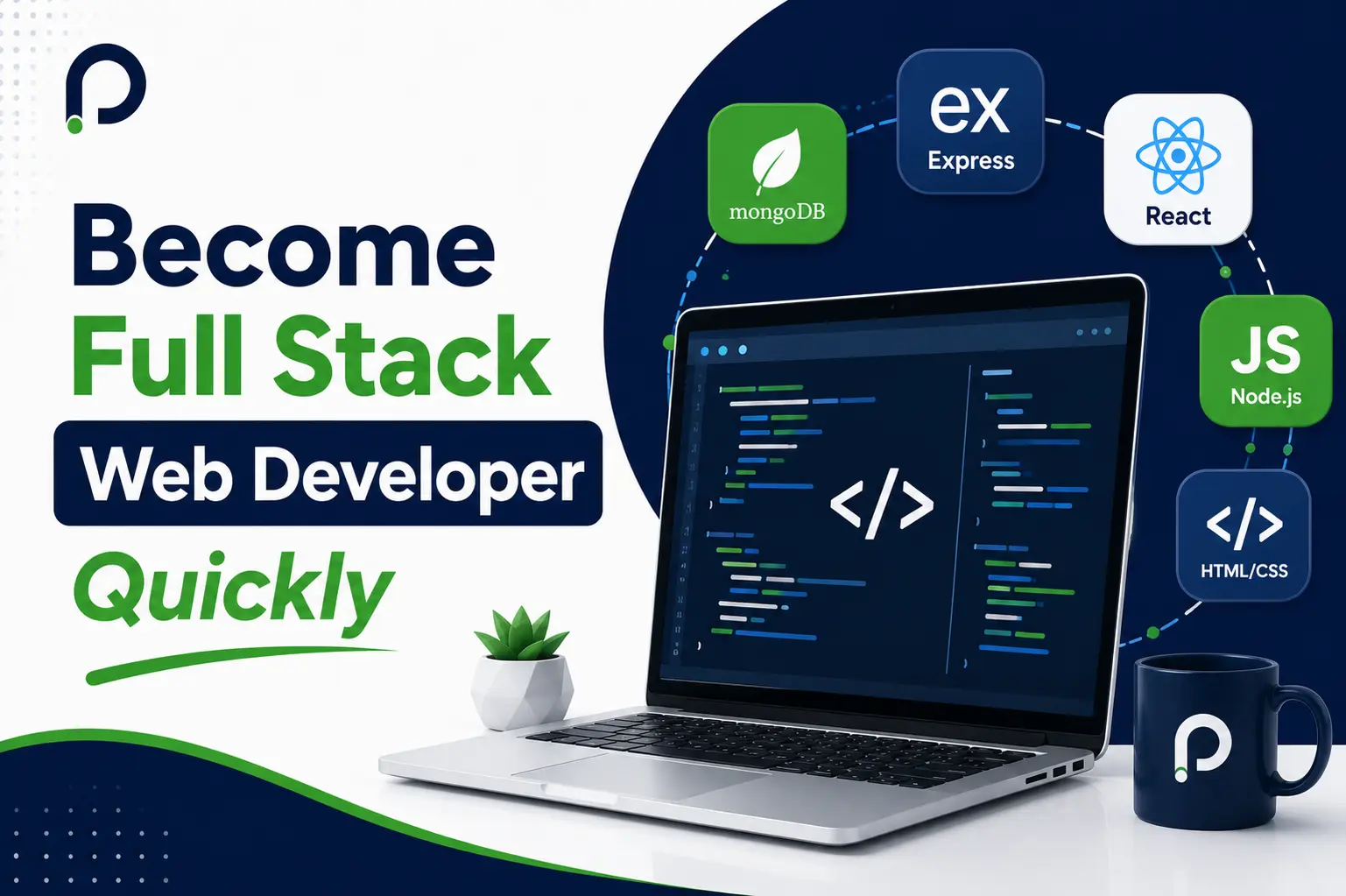
There are a bunch of different technology combinations, usually called “stacks”, like MERN (MongoDB, Express, React, Node) or MEAN (MongoDB, Express, Angular, Node). But trying to learn multiple stacks at once slows you down a lot. It’s better to just pick one stack, get really comfortable with it, and then ship a few solid projects. That path will make you job-ready far faster than spreading your attention thin, honestly.
Build a Portfolio That Shows Your Thinking
A portfolio matters more than a resume in this field. Like, employers want to see real code, not only a list of what you “can do”. If you host projects on GitHub, plus a live demo when it’s possible, hiring managers get a better sense of how you think and how you work through them. problems. Even two or three solid projects can be more persuasive than a dozen half-finished ones, so focus on quality over the quantity thing.
Apply Before You Feel “Ready”
One of the biggest time wasters in this whole journey is waiting, until you feel completely ready, before applying for jobs. Most developers, even the experienced ones, don’t really know all the details a job posting asks for in the first place. Applying sooner than you think you should, like, especially for junior or entry level full stack roles, tends to speed up how you learn because real world projects nudge you to pick things up faster than solo practice ever could.
How Profyd Helps Aspiring Developers
At Profyd, we keep on listing full stack developer roles for different companies across Lahore, Pakistan, from startups that are building their first product to more established organizations expanding their engineering unit. If you’re searching for an onsite position so you can work side by side with a team, or maybe a remote role with extra flexibility, our posts cover both styles. They also sometimes come with day- and night-shift options depending on what each employer needs and how they run things.
Conclusion
Becoming a full stack web developer fast is totally possible, but it takes more focus than trying to absorb everything at once. You’ve got to get the basics right and then keep shipping real projects, and only after that apply for positions, even if you don’t feel fully ready yet. If you are based in Lahore, Pakistan, and you want to start or build up your development career, Profyd links capable developers to live opportunities, like both in-person and remote roles. Talk to the Profyd team today so you can spot a role that fits your current skill level and the way your schedule runs.
Frequently Asked Questions
How long does it really take to become job-ready?
If you stick with it, roughly six months to a year is realistic for most people once they begin from nothing, sort of “scratch”.
Do I need a computer science degree?
Not necessarily; a lot of successful full-stack developers are self-taught or came out of bootcamps instead of going the classic degree route.
What stack should new learners study first?
Honestly, the MERN stack is a common bet because you work with JavaScript in multiple places, so you’re not juggling as many separate languages all at once.
Is it better to learn front end or back end first?
Usually, front-end basics first feel less heavy for beginners since you see the outcome right away, and that keeps motivation steady, you know.