Report cards always seem to come home on a Friday, so the whole weekend ends up being about one number, and this time it’s a 48 in physics. The boy insists he studied. He probably did, too, if studying means sitting at the desk every night the week before with the forces chapter open, reading it over and over until the words went soft and stopped meaning anything. His mother isn’t arguing about the hours, she saw him there. What nobody at the dinner table can figure out is where all those hours went, because they clearly didn’t end up on the paper. At Profyd, parents bring us this exact puzzle all the time, wanting to improve science grades without adding more hours, and our online science tutors usually track down the answer within the first lesson or two.
Lots of effort, not many marks. That’s usually when the phone calls to relatives start, does anyone know a good physics tutor, and the honest answer to the problem isn’t more of the same studying, because the kid isn’t lazy, he’s just been doing the wrong kind of work. If you want to improve science grades, there are normally three dull culprits to deal with together: gaps from earlier years that slipped past everyone, a revision routine that looks busy and does little, and exam technique that nobody ever sat down and explained. A personal online tutor can chase all three, mostly because there’s finally one grown-up looking at one kid’s mistakes instead of a class average.
That’s really what this article is about: how to improve science grades with personalised online tutoring when ‘study harder’ has already failed. You’ll find out what a tutor does in that first, mostly detective-style lesson, why testing beats re-reading (annoyingly), how exam technique and timing get sorted, and a couple of small things parents can do at the dinner table that help more than you’d think.
Why Hard Work Doesn’t Always Improve Science Grades
Re-reading, mostly. The chapter gets gone through a fourth time, the diagrams start to feel like old friends, the yellow highlighter gives up, and at some point the brain decides that recognising a page means knowing what’s on it. Then the paper asks about friction on a slope rather than on a flat floor and all that recognising turns out to be useless. Students in Lahore and across Pakistan do this for entire terms, and it’s not their fault really, since nobody tells them it’s about the weakest way to revise there is.
The old holes are the other big thing. Picture a girl who never really got comfortable rearranging formulas back in Grade 8. Years later she’s dropping marks on moles, concentration and gas volumes, test after test, and she’s decided she’s ‘bad at chemistry’, when the truth is she’s a little shaky on algebra and that’s it. Her school teacher, with thirty-odd others to mark, doesn’t have the time to chase one wrong answer that far back, so the same three or four marks keep leaking away every single time.
The first lesson is mostly detective work
A good tutor barely teaches in the first session. There’s a short mixed quiz, maybe a slow walk through last term’s paper, and a lot of ‘talk me through how you got that’, which is usually when the real culprit shows itself. Maybe it’s a minus sign that keeps flipping, maybe the student reads ‘state’ and writes a paragraph, maybe units vanish somewhere between line two and line three. By the end of the hour there’s a short list of what is actually costing marks, and it’s quite often not what the parents guessed on the drive home from school.
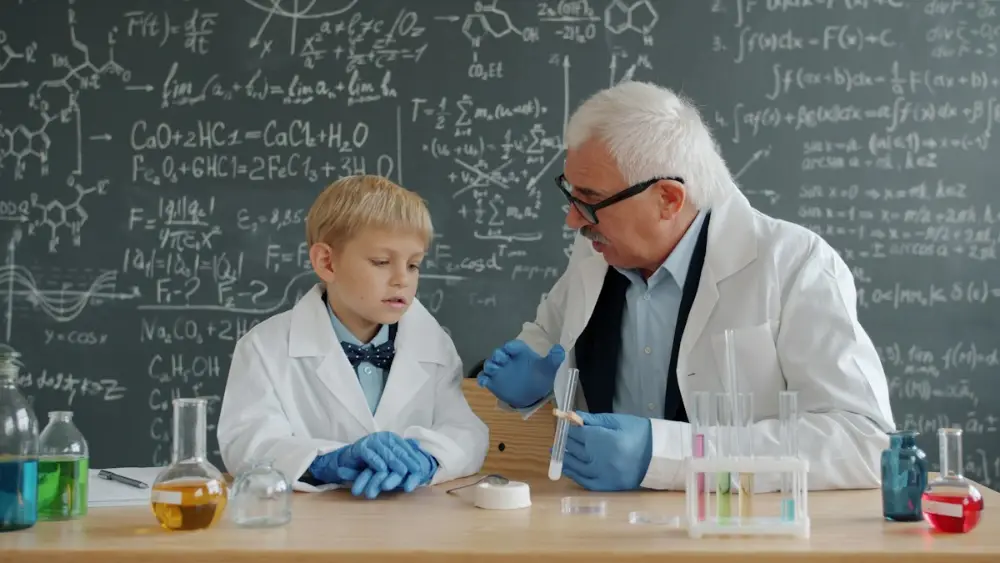
Chemistry tends to throw up the most surprises in that first session, partly because so much of it is quietly mathematical. Tutors who specialise in the subject, the sort described in this overview of career opportunities in chemistry teacher jobs, get very quick at spotting whether a wrong answer is a chemistry problem or a maths one hiding underneath.
Lessons built around one student’s mistakes
Once the list exists, lessons get shaped around it. If electricity is fine but waves are a mess, waves get the time. If the student understands everything but writes three-mark answers in one sentence, the work becomes about writing, with the tutor rewriting a weak answer alongside a model one so the difference is obvious. None of this is complicated. It’s just very hard to do in a classroom where the next topic is already on the board.
Online tools help the lessons stay lively instead of turning into another lecture. Interactive diagrams, quick polls, a shared whiteboard both people can scribble on; there’s a whole toolkit for making screen lessons work, and the physics side of it is covered well in this guide on how to deliver engaging online physics lessons.
Testing instead of re-reading
Probably the single most useful habit is closing the book and dragging the answer out of memory, even badly. There’s a name for it in the research, retrieval practice, and it beats re-reading so consistently that it’s a bit odd schools don’t push it harder. A tutor slips it in without making a song and dance about it: five quick questions on last week’s topic to start, a few on today’s before the call ends, and now and then something from a month ago just when the student assumed it was safely forgotten.
Students don’t enjoy it at first, and honestly that’s sort of the point. Straining to remember the stages of mitosis, getting two out of four, checking, trying again a few days later, that effort is what makes it stick. Most students who swap the highlighter for self-testing notice a difference in a few weeks, even if they moan about it the whole time, and it’s one of the cheapest ways there is to improve science grades without adding a single extra hour.
Biology needs its own approach
Biology rarely has the maths trouble chemistry and physics do. Its problem is volume, so many terms and processes and labelled parts that students drown in it. Here tutoring looks more like coaching a memory, with flashcards, flowcharts drawn from scratch rather than copied, and spaced review over weeks. Tutors who teach this subject online, the kind featured in this piece on careers in online biology teacher jobs, tend to be very organised about it.
Exam technique is a skill, not a talent
A surprising number of marks get lost on things that have nothing to do with knowing science. Answering ‘describe’ questions as if they said ‘explain’, for instance, or missing that a question wants two points for two marks, or spending ten minutes on a one-mark question because it looked interesting. Past papers, worked through with someone who has read hundreds of mark schemes, fix most of this faster than any amount of extra content.
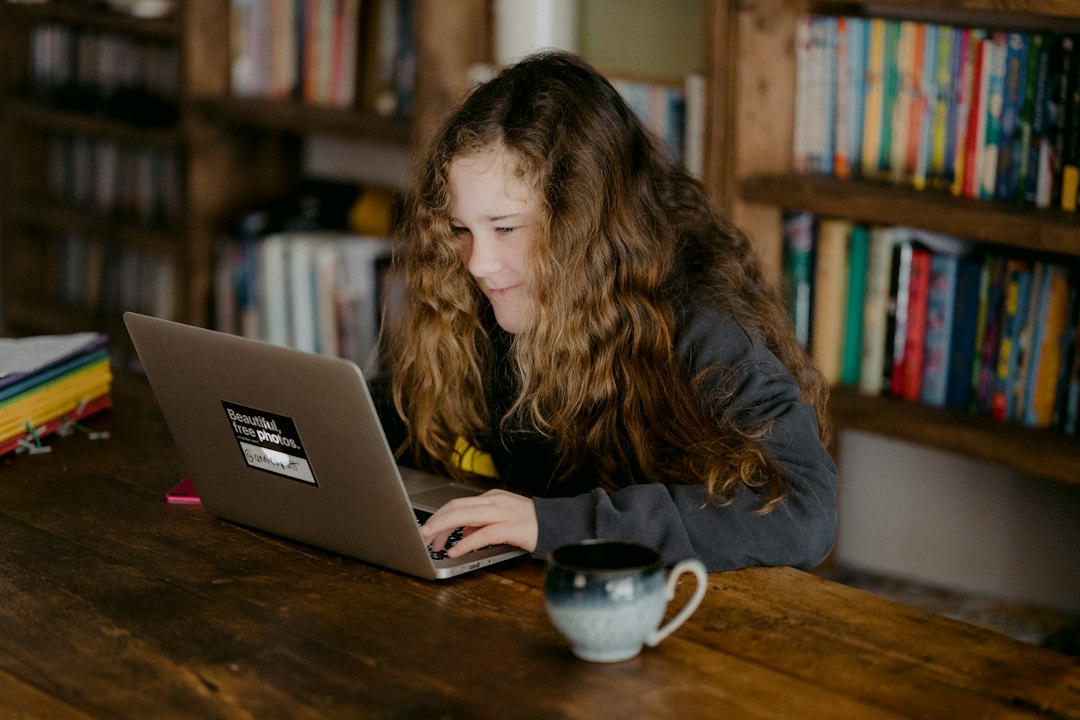
There’s also the clock to get used to. A timed paper on a Saturday morning at the kitchen table, the phone parked in the other room, marked together with the tutor on Monday evening, is about as dull as studying gets, but after two or three rounds the worry about running out of time mostly drains away and the student starts to sense how long a six-mark question deserves compared with a two-marker.
Keeping motivation alive between lessons
Marks don’t go up in a neat straight line, which can be rough on a teenager who expected an A after the third lesson. There’s nearly always a flat stretch, sometimes even a small dip while the old habits get pulled out and new ones put in. Tutors who are good at this keep the student going with small wins and a bit of variety, borrowing the sort of tricks teachers use to increase student engagement in a full classroom and shrinking them down to one kid on a laptop.
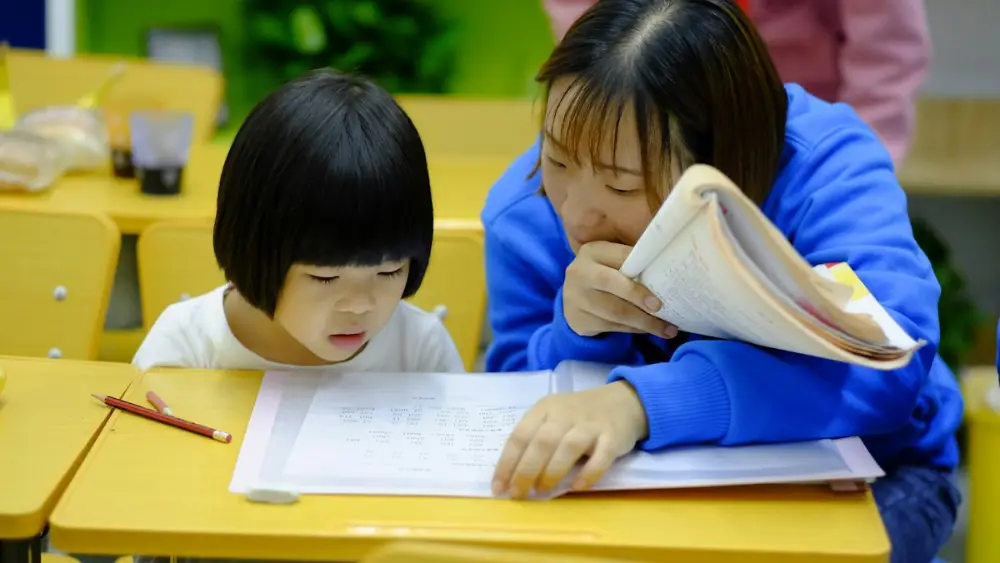
Parents can help a lot here without hovering over the desk. ‘What did you get wrong today?’ gets a far more useful answer than ‘how was the lesson?’, which nearly always gets ‘fine’. It also sends a small message that mistakes are part of how anyone learns, and over a term that sort of habit does more to improve science grades at home than any strict timetable stuck on the fridge.
Why demand for science tutors keeps growing
With so many families now chasing the same goal, science sits close to the top of the list of most demanded subjects for tutoring, alongside maths and English. That’s true for students in Pakistan and for Pakistani families in the UK, USA and Canada, who often prefer a tutor who knows both the syllabus and the culture at home.
Profyd connects schools and families with experienced subject teachers, and more on how the platform works sits on the about Profyd page.
Conclusion
The boy with forty-eight in physics doesn’t need more hours. He needs someone to find out where the marks are actually leaking, swap re-reading for testing, and sit through a few past papers with him until the timing feels normal. That’s the real way to improve science grades, and personalised online tutoring happens to be very well suited to it, since the whole lesson is built around one student and nothing else. Give it a term, and the next Friday report card tends to be a lot less dramatic.
FAQs
How soon does tutoring improve science grades?
Class tests first, typically somewhere around the six to eight week mark if sessions are regular. Board exam grades move more slowly, a term at least, longer when there were big gaps from Grade 7 or 8 to patch up first.
Online or home tuition, which is better for science?
For most science topics it’s just as good, sometimes better, thanks to the simulations and the shared whiteboard. Honestly the format matters much less than who’s teaching.
Two sessions a week, or more?
Two is plenty for most students for most of the year. Some families add a third in the last couple of months before exams, which is fine so long as school homework and sleep don’t get squeezed out.
And how do you pick the right tutor?
Subject knowledge comes first, and close behind it, knowing the exact exam board your child sits. After that, ask whether they set practice questions and mark them properly or just tick. A trial lesson settles the rest; watch what happens the first time your child gets one wrong.