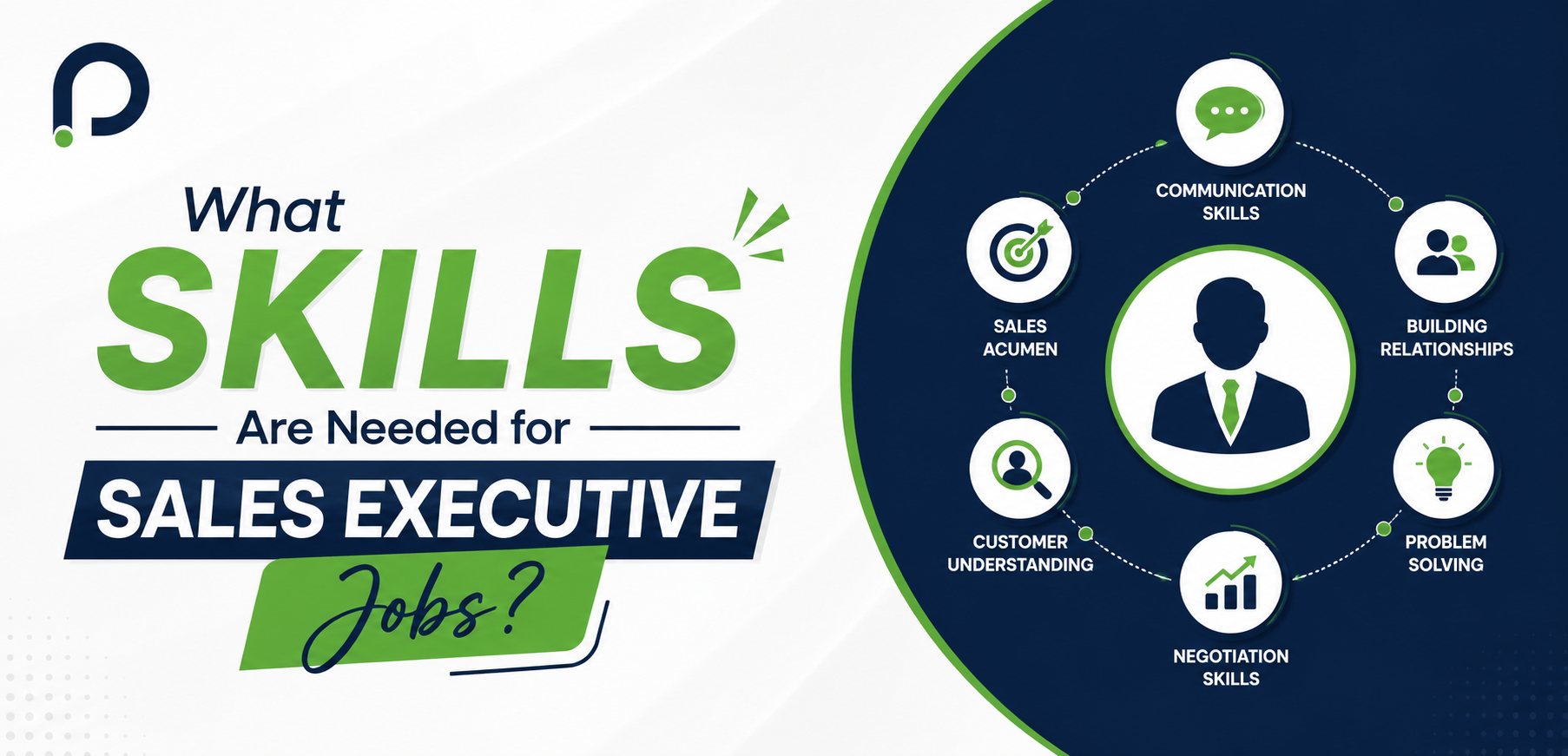
Introduction of Sales Executive
Sales is one of the more directly impactful roles in basically any organization. A sales executive is not only some person who convinces people to buy things — they’re like strategic relationship builders, market intelligence gatherers, and revenue drivers, whose work directly decides if a company moves forward or gets stuck. So if you’re pursuing or just advancing into sales executive jobs, figuring out the real skills that quietly separate the average performers from the exceptional ones is probably the best investment you can make in your career. Profyd helps sales professionals locate positions that actually reward their strengths, and also line up with what they want to achieve.
The Foundational Role of Communication in Sales
Communication sits kinda at the center of basically every sales interaction, but it’s also more than just being articulate. Top sales executives often communicate in a way that shifts, like they’re always tuning. They don’t use the same language, or the same tone, for everyone. Instead they adjust their wording, their cadence, and how much detail they share based on whether they’re speaking with someone technical, a senior executive, or just the end user. That kind of flexibility is learnable… but it doesn’t happen by accident; it takes real practice, and it means paying close attention to how others react to what you say.
Just as crucial is the ability to listen actively and kind of strategically too. The best sales executives end up spending more time asking questions and listening carefully than they do presenting, pitching, or pushing. When you first understand a prospect’s particular situation, the friction points, and what they’re actually trying to achieve before you propose anything, the conversation usually becomes more relevant, and honestly more compelling, than it would with a generic sales script.
Product and Industry Knowledge as a Competitive Advantage
Customers can tell right away if a sales executive actually gets what they’re selling. If the product knowledge is kind of superficial, it shows, and it erodes trust in a way that is hard to undo, you know. Putting in the time to understand your product deeply, your industry, how you stack up against the competition, and the real day-to-day world your customers live in, this stuff separates you in just about every talk.
And no, this is not about memorizing features and specs, like robotic mode. It’s more about grasping how the product resolves real issues, which customer types gain the most from it, and what the true boundaries are. Sales people who can speak plainly about trade-offs, and steer customers toward the right fit — even if that means suggesting another option, or admitting a limitation — they create a trust that keeps going, and it often turns into longer term client relationships and solid referrals.
Negotiation: The Skill That Drives Revenue
Negotiation is one of the most studied and talked about skills in sales, and honestly, for a good reason— it’s basically where agreements are won or they fall apart. Real negotiation isn’t about being pushy, or holding things back like some kind of chess move. It’s more like getting a real picture of what both sides need, figuring out where additional value can show up, and then steering toward results that actually work for everyone who’s in the room.
For sales executive jobs in Lahore, key negotiation competencies usually include anchoring effectively, dealing with objections without getting defensive, knowing your true walkaway point, and spotting when a buyer is genuinely constrained versus when they’re just testing how flexible you might be. And yeah, preparation is the base layer for all of it—negotiators who have looked into the customer’s context, their budget, and their decision process tend to outshine people who are just improvising on the fly.
Resilience and Managing Rejection
Rejection is kinda unavoidable in a sales career, and how you respond to it kinda decides your path more than almost any other thing. Sales executives who take rejection personally, lose drive after a lost deal, or end up avoiding follow-up calls because they’re afraid of yet another no will basically always have a harder time hitting their real potential.
Resilience in sales is not really about being emotionally untouched — it’s more like handling setbacks quickly, pulling out the useful lesson, and then moving ahead with the same kind of energy. This mindset is partly personality, yeah, but it can be built through discipline, support from peers, regular checking in about what you can control, and keeping a solid focus on long-range goals instead of one single result.
Time Management and Pipeline Organization
Sales executives often end up juggling dozens of active prospects in different stages of the buying cycle all at once. If someone doesn’t have strong organizational skills, and doesn’t stick to disciplined time management, then agreements can get dropped, follow-ups can be delayed or kind of forgotten. In the end opportunities disappear not because of a lack of skill, but because coordination is weak.
Being comfortable with CRM tools, like Salesforce HubSpot Zoho and others, is now sort of a baseline expectation for sales executive roles. These platforms support tracking conversations, setting reminders for what’s next, managing pipeline stages, and producing reporting that guides strategy. Sales people who use CRMs well, they tend to get real efficiency gains compared with those who depend on just memory or basic spreadsheets.
Building and Maintaining Long-Term Client Relationships
Short-term thinking, like only focusing on getting the current deal signed and wrapped up, is one of those patterns that really does harm, especially in sales. The sales execs who are most successful tend to think less about “right now” and more about lifetime client value, kinda like they keep the whole story in mind. They stay in contact after a deal closes, they share genuinely helpful, even niche info between buying cycles, and they sort of frame themselves as trusted advisors, not just some periodic vendor showing up when there’s a new quota.
And yes, this kind of approach tends to spark renewal business plus upsells and referrals too. Those things, are usually way cheaper to secure than cold leads that you have to chase from scratch. More and more companies are realizing this, so compensation models are being built to reward long-term account expansion rather than only new acquisition. If you put a relationship-first orientation in place early, in your sales career, it will pay you back for years and years.
Analytical Thinking and Using Data to Improve Performance
Modern sales is this data-rich kind of environment . You can measure conversion rates, average deal size, how long sales cycles really take, win/loss ratios, plus activity metrics , all of that becomes kind of instructive in practice. And sales executives who can interpret their own data, spot patterns that repeat , and make evidence based adjustments to their way of doing things tend to improve faster than people who just lean on pure intuition.
Now this does not actually need advanced statistical skills, not at all. It’s more like curiosity, and a willingness to look honestly at what the numbers are, you know , saying. Why are deals stalling at that one particular stage? Why does your win rate shift across the industry segments you serve? You ask those things, then you answer them in a systematic way, and that’s what separates consistent top performers from the folks who get a few good months then kind of plateau , without understanding why .
Common Skills Needed for Sales Executive Jobs at a Glance
- Strong verbal and written communication skills tailored to different audiences
- Deep product and industry knowledge that builds credibility with buyers
- Effective negotiation and objection handling techniques
- Emotional resilience and a healthy relationship with rejection
- CRM proficiency and disciplined pipeline management
- Long-term relationship building and account development mindset
- Analytical thinking and data-driven performance improvement
Conclusion
Getting ahead in sales executive jobs is way more than just persuasion. It asks for this real mix of strategic thinking, emotional awareness, product know-how, and steady follow-through. The abilities mentioned in this article are, in practice, all teachable—none of them belong only to some tight group of naturally gifted folks. What really divides people who end up with long lasting sales careers from those who slowly burn out is how much they commit to learning, quiet reflection, and regular refinement.
If you’re prepared to hunt down a sales executive position where your skills are properly seen and rewarded, Profyd can help. Profyd can match you with the right opportunity, connect with the Profyd team today, and let them help you reach a place where you can expand, earn well, and shape a career that mirrors your actual potential.
Frequently Asked Questions
Q: Do sales executive jobs require a specific degree or background?
Most sales executive positions do not require a specific degree. Employers prioritize demonstrated communication skills, commercial awareness, and a track record of results. Some industries — like pharmaceuticals, technology, or finance — may require relevant technical or educational backgrounds, but in many sectors, performance and drive matter more than academic qualifications.
Q: How important is CRM proficiency for sales roles?
Very important. Most professional sales organizations use CRM platforms to manage their pipeline and track performance. Being comfortable with tools like Salesforce or HubSpot — and using them consistently — signals professional discipline and allows you to demonstrate your performance through data rather than anecdote.
Q: How can I improve my negotiation skills?
Read foundational books on negotiation, practice in low-stakes settings, and debrief every negotiation — including ones you win — to understand what worked and what did not. Role-playing with colleagues and seeking feedback from mentors are also highly effective methods. Negotiation improves most quickly through reflective practice, not just experience.
Q: What is the career progression for a sales executive?
A typical progression moves from sales executive to senior sales executive, then to key account manager or sales team lead, followed by sales manager, regional director, and ultimately VP or director of sales. Lateral moves into business development, partnerships, and account management are also common paths for experienced sales professionals.