Every spring a careers counsellor at a college in Lahore gets pretty much the same visitor, sometimes six or seven times in a week. A final-year student edges in, perches on the very front of the plastic chair, and asks some version of ‘Sir, honestly, which field has jobs?’ Usually there’s a degree that relatives half-chose, a worry picked up from a talk show, and a cousin in Canada who keeps texting ‘just learn coding, yaar’. The counsellor sends the peon for two cups of tea before answering, because the real answer takes a while, and the students who get a rushed one tend to wander back into his office a year later looking more worried than before. At Profyd, we post jobs across many of these industries, so that same question reaches us from graduates all year round.
What he tells them, roughly, is that job opportunities in Pakistan are lumpy rather than missing. A small number of industries do most of the hiring, good year or bad, and a couple of newer ones are growing quickly enough to matter for anyone graduating now. Then he’ll tell the story of a commerce boy from a few batches back who applied to banks, only banks, for a whole year, got nowhere, tried a textile exporter’s merchandising team on a whim, and has been promoted twice since. ‘Same degree,’ he says, tapping the desk. ‘Different door.’
That conversation is roughly how this article runs. You’ll get a tour of the industries doing most of the hiring, textiles and manufacturing, IT, banks and finance, schools, call centres, hospitals and the rest, plus what each one tends to look for in a fresh graduate, and a few words on how the hiring process itself has changed over the last few years.
Where Most Job Opportunities in Pakistan Are Coming From
Out comes a scrap of paper, usually the back of an old timetable, and he draws a lopsided circle and starts carving it up while he talks. Textiles gets a big fat slice. Shops and services get another. Then farm-related work, a lot of it informal, then IT and telecom, schools, hospitals, banks, building sites. He’s quick to admit he’s no economist and the slices are guesses. What he wants the student to see is that most hiring happens in a few places, and that the fields people rave about online aren’t always where the bulk of the actual jobs are, something students often only realise after a year of applying in the wrong direction.
Textiles and manufacturing
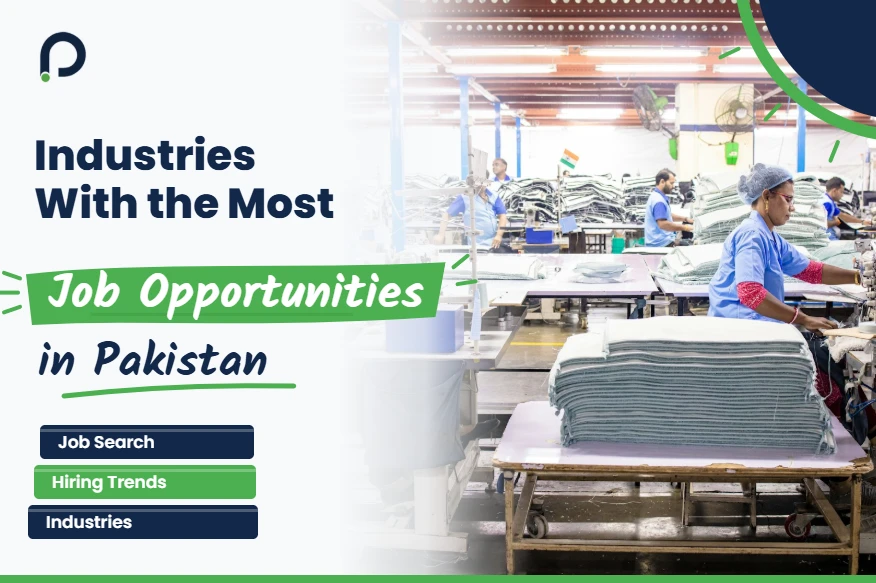
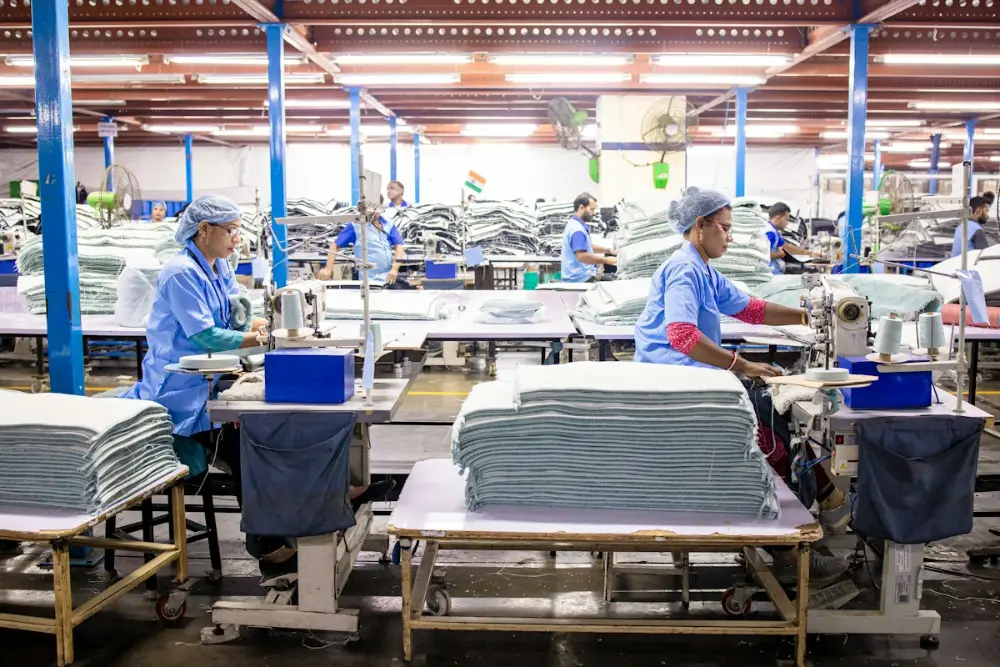
Textiles is the heavyweight and has been for as long as anyone in his family can remember. The textile industry in Pakistan employs more people than any other kind of manufacturing and earns the most export money, by a mile. He once took a group of students round a mill on a college trip, and they still talk about it: the spinning hall so loud everyone gave up talking and used hand signals, the dye house steaming like a giant kitchen, endless rows of stitching machines, and upstairs a young merchandiser, maybe twenty-six, on a video call with a buyer abroad at nearly midnight, calmly arguing about the shade of a blue towel. Thousands of people worked in that one compound.
For graduates, he says, the best openings are usually away from the machines, in merchandising, supply chain, compliance and textile engineering. Hardly anybody at university mentions these jobs. They pay steadily, though, and people tend to climb faster than they’d expect, partly because so few graduates bother applying.

Beyond textiles there’s food processing, medicines, cement, car parts, fans and electrical goods, all of them hiring engineers, technicians, supply chain people and sales teams, sometimes in towns students haven’t thought about moving to. One of his old students, a mechanical engineer who’d dreamed of designing cars, ended up running maintenance at a biscuit factory, laughed about it for a year, and now manages two plants. Manufacturing doesn’t sound glamorous at a family dinner, but it quietly produces a large share of steady job opportunities in Pakistan for people with technical degrees.
IT and software
This is the one the cousin abroad never stops mentioning, and honestly he’s not wrong. IT and software exports have grown year after year, and software houses, product start-ups and freelancers doing work for clients in the USA, UK, Canada and Australia now employ a big and growing slice of the country’s young graduates. Experienced developers earn some of the best salaries around, and remote work means nobody has to live next to a fancy tech park to get in, a laptop and a decent connection are most of the entry ticket.

Still, the counsellor never says ‘just learn coding’. What he says is: pick one direction and get really good at it before you touch the next shiny thing. Full-stack web development keeps coming up as one of the most wanted profiles for juniors, and this guide to becoming a full-stack developer sets the steps out in a sensible order, which beats the random-tutorial approach most students start with.
Banks, audit firms and finance teams
Every business needs somebody who keeps the money honest, whether that’s the corner chemist with one cash drawer or a multinational with a glass lobby and a coffee machine nobody knows how to use. He tells commerce students about a girl from his class of 2019 who joined an audit firm as a trainee, cried over her first tax season, and is now a manager there with her own team. Before they write off the whole field after one bad professor, he points them to this guide on how to start a career in accounting and finance.
Education
Because the country is so young, teaching is enormous. Private schools, academies, colleges and universities are hiring almost all the time, and online teaching has added a whole extra layer, with teachers in Lahore working evenings with students in the UK and Canada. Science, maths and English teachers are the hardest to find, as this look at subject teachers in demand shows, and a good physics teacher can usually choose between two or three offers.

Call centres and support work
Call centres and outsourcing companies have grown quietly in the background, handling customer complaints, sales calls and back-office paperwork for firms here and overseas. One of his former students took a night-shift job at one ‘just for six months’ to pay off a motorbike, and five years on he trains every new batch of joiners and looks after a floor of forty people. Lots of people quit these jobs within the year, he admits, and the ones who stick it out often go up surprisingly fast, which this piece on why the customer support specialist role is important helps explain.
Healthcare
Hospitals can’t find enough nurses, so a trained one rarely waits long for an offer, and doctors, pharmacists, lab technicians and physiotherapists are wanted too. Then there’s everything around the patients that students never picture, the billing office, medical reps driving between clinics with sample bags, the IT person keeping the lab system alive on a Sunday, the clerk who makes sure the right report lands on the right desk before evening rounds. A boy who fainted during a first-aid demo at college now runs the admin side of a diagnostic lab, he likes to point out, and is doing very nicely.
Construction, agriculture and the rest
Farming still employs a huge share of the country, though a lot of it is informal and seasonal. Building and property hire heavily whenever the economy picks up. Shops, delivery, warehousing and telecom fill in the rest, and online shopping in particular has created thousands of new job opportunities in Pakistan over the last few years, in delivery riders, warehouse teams and the digital marketers who run the stores’ pages.
How Hiring Is Changing
Something else he warns students about: the way companies hire has changed nearly as much as who’s hiring. Bigger firms now have HR and talent acquisition people who plan recruitment months in advance, set online tests and structured interviews, and spend a surprising amount of time asking whether a newcomer will get on with the team. If you understand how those people think, you walk in with an edge, and this piece on recruitment skills for talent acquisition specialists lets you peek at the process from their side of the desk.

HR is a growing career in its own right, especially in Lahore, where many big employers keep their head offices, and anyone tempted can see current openings on Profyd’s HR jobs in Lahore page.
Conclusion
By the bottom of the teacup the student has usually stopped perching on the edge of the chair. The big clusters of job opportunities in Pakistan are textiles and manufacturing, IT, finance, schools, customer service and hospitals, with building, retail and online shopping adding plenty more. ‘Pick one of those and learn what it actually pays people for,’ he says, folding the scrap of paper and handing it over, ‘then send ten good applications, not a hundred bad ones.’ The cousin abroad isn’t wrong about coding, he adds at the door. He just isn’t the only person in the family with decent advice.
FAQs
Where are most job opportunities in Pakistan right now?
In formal work, textiles and manufacturing still take on the most people. Services, IT, schools, banks and hospitals come next, roughly in that order.
Is IT really worth it?
For most people with patience, yes. It’s grown steadily and pays well, particularly for developers working with clients abroad, though the first job takes real effort to land.
And for a fresh graduate, where’s the easiest start?
Usually the support desk at a call centre, a sales team, a teaching post or a junior job at a software house. He calls them ‘first doors’, and reminds students that a first door is something you walk through, not somewhere you have to stay.
What about Lahore specifically?
It’s one of the largest job markets in the country, busy in IT, textiles, finance, schools, HR and marketing, and plenty of head offices sit there.